ServicesSealants
Dental Sealants for Kids in Quincy
Back teeth have deep grooves that a toothbrush can't reach. A sealant fills those grooves with a thin coating so food and germs can't settle in. We check every tooth first, so we seal healthy enamel and treat anything that needs more than a sealant.
What a Sealant Does
The chewing surfaces of molars are full of pits and narrow grooves. Many are thinner than a single toothbrush bristle. Food packs in, bacteria feed on it, and that is where most cavities in kids start.
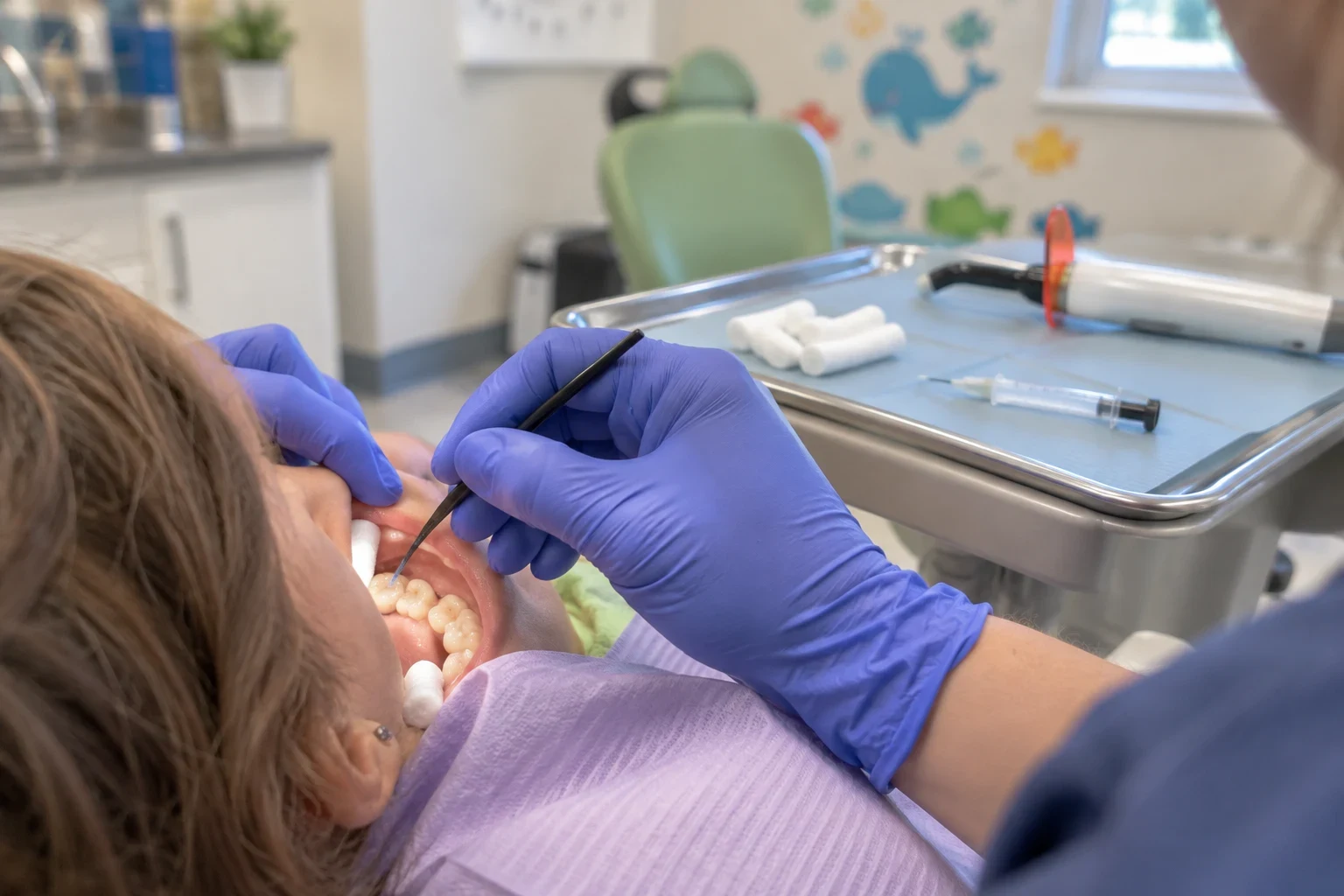
A sealant is a liquid resin we paint into those grooves. It hardens in seconds and leaves a smooth surface that is easy to brush clean. There is no drilling and no numbing.
The part that matters most happens before the brush touches the tooth. A dark groove can be a harmless stain or the start of a cavity. We look closely, and take an X-ray if it is needed, so we know which one it is. Sealing over active decay is the wrong fix. If a tooth needs a small filling instead, we tell you that plainly.
What Your Child's Sealant Visit Includes
- A close look at each groove
- We dry the tooth and check every pit under good light. Stains, soft spots and chalky white areas each tell us something different.
- An honest seal-or-treat answer
- If a groove shows early decay, we explain what we saw and what it needs. Sometimes that is a sealant, sometimes a small filling, and sometimes we just watch it.
- Careful cleaning and prep
- The tooth has to be clean and completely dry for the sealant to bond. We polish the surface and use cotton and gentle suction to keep saliva away.
- Placement and a bite check
- We paint the sealant on, harden it with a small blue light and check how your child bites. If anything feels high, we smooth it right then.
- Checks at future visits
- Sealants wear with chewing. At each of your child's exams and cleanings we look at them and touch up any spot that has chipped or worn thin.
When Sealants Make Sense for Your Child
Six-year and twelve-year molars arriving
The first big back teeth tend to erupt near age six, and the next pair near age twelve. Sealing them shortly after they break through covers them during the stretch when cavities are most common.
Grooves that run deep
Some children are born with deeper, tighter grooves than others. When we can see food staying wedged in them, a sealant is a sensible choice.
Food keeps getting trapped
Maybe your child often mentions something stuck in the back teeth, or you spot it while checking. Either way, those grooves are holding on to food.
A history of cavities
Kids who have had cavities are more likely to get more. Sealing molars that are still healthy, sometimes including baby molars, helps lower those odds.
Back teeth get missed at brushing time
Little ones often skip the molars when they brush. A smooth, sealed surface stays much cleaner even when brushing is hit or miss.
What Moves the Price of Sealants
Sealing teeth is one of the simpler jobs we do, so the bill mostly comes down to how many teeth get sealed. Before we start, we walk you through the plan and what it costs, so the total matches what you heard. For payment, we take MasterCard, Visa and Discover cards, work with most insurance plans, and offer the CareCredit Patient Payment Plan.
How many teeth
Each tooth is billed on its own. Sealing just the four first permanent molars costs less than sealing those plus the premolars or the second molars.
What we find during the check
A groove with early decay may call for a small filling rather than a sealant. That changes the price for that tooth, and you hear the reason from us before any work begins.
The rules of your plan
Plenty of dental plans pay for sealants on permanent molars, though many set an age cutoff or limit how often they cover them. A quick look at your benefits tells you where you stand.
Repairs down the road
Chewing can chip or thin a sealant over time. Patching a worn spot at a later visit is usually a short job.
How the Appointment Goes
- 1
Check the teeth
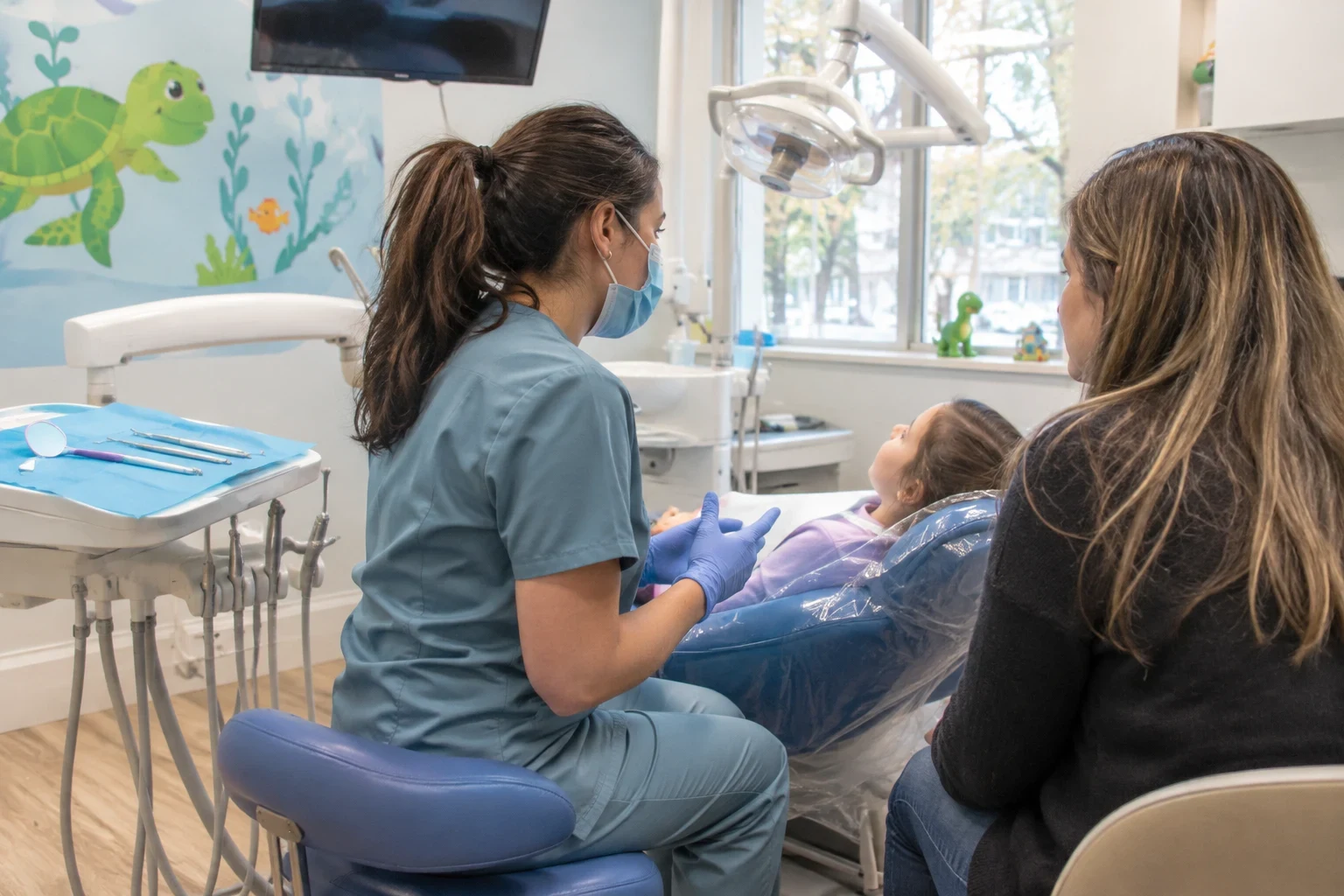
We look at each molar and decide which ones are sound enough to seal. You hear what we found before we start.
- 2
Clean and condition
We polish the grooves, then apply a mild gel that roughens the enamel slightly so the sealant grips. It tastes sour for a moment, then we rinse it off.
- 3
Paint and harden
We brush the sealant into the grooves and shine a blue light on it for a few seconds. Most kids think the light is the best part.
- 4
Bite check and done
We have your child bite down and adjust anything that feels off. Your child can eat and drink normally when they leave.
Parents Ask Us About Sealants
Is there any pain with sealants?
No. We don't use needles or a drill. Your child only has to keep their mouth open a few minutes while we keep the tooth dry. For most kids it is one of the easiest parts of a dental visit.
Will the sealants wear off?
They hold up for years, though chewing slowly wears them thin. We look at them at each checkup and patch any spot that has worn or chipped. Keeping up with regular exams is what keeps them doing their job.
Can a sealant go on top of a cavity?
Not on a cavity that needs treatment. Covering active decay can hide a problem that keeps getting bigger underneath. That is why we look closely before sealing anything. Some very early enamel changes can be sealed, but a true cavity gets a filling.
Do baby molars ever get sealed?
In some cases, yes. Baby molars usually hang on until about age ten to twelve. For a child with deep grooves or a history of cavities, sealing them can be a good idea. We will let you know if we think it makes sense for your child.
Are brushing and fluoride still needed after sealants?
Yes. A sealant only protects the chewing surface. The sides of each tooth and the gaps between teeth still depend on brushing, flossing and fluoride. Lots of kids have a fluoride treatment during the same visit as their cleaning.
When can my child eat afterward?
Right away. The sealant is set hard before your child gets out of the chair. Hard or very sticky candy can wear sealants down faster over the years, so it is best kept to a minimum.
Get Your Child's Molars Checked and Sealed
New patients start with a careful look at every tooth. We seal the ones that are healthy and tell you plainly about any that need something else.