ServicesRoot Canals
Root Canals for Kids in Quincy
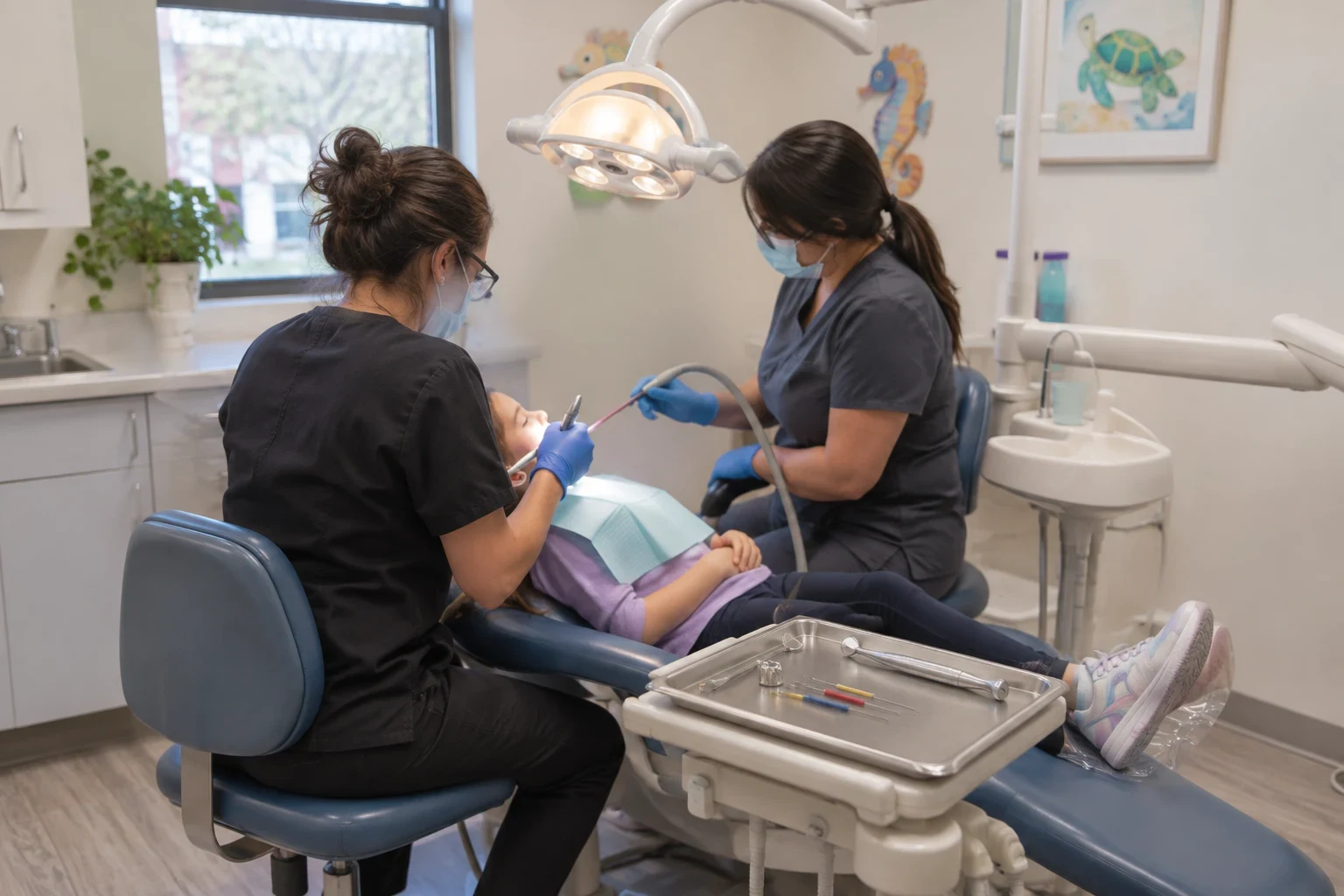
When a cavity or a fall reaches the nerve inside your child's tooth, we treat the infected part and keep the tooth working. We test and X-ray first, so we know whether the nerve can heal, needs treatment or the tooth should come out.
What a Root Canal Means for a Child
Inside every tooth is soft tissue called the pulp. It holds the nerve and blood supply. Deep decay or a hard knock can let germs reach it. Then the pulp gets inflamed or dies, and the tooth starts to ache or swell.
In kids, most of this work is on baby teeth. Often we only need to remove the top part of the pulp in the crown of the tooth. That is called a pulpotomy. If the infection has gone down into the roots, we clean those out too. That is a pulpectomy. Teens with permanent teeth get a full root canal, the same kind adults get.
Not every sore tooth needs this. Some need a filling. Some are too far gone and are better pulled. We look before we decide, because the wrong fix just brings your child back in pain a few months later.
What the Treatment Includes
Testing before treatment
We take X-rays and check how the tooth reacts to cold and pressure. This tells us if the nerve is irritated, infected or already dead. It also shows how close the permanent tooth underneath is.
Numbing that kids tolerate
We use a numbing gel before the shot and go slowly. We tell your child what they will feel in words they understand.
Pulpotomy or pulpectomy
We remove the damaged pulp, clean the space and place a medicated filling. For baby teeth, the material is made to dissolve as the tooth naturally loosens.
Root canals on permanent teeth
For older kids and teens, we clean and shape each root canal and seal it. This keeps the adult tooth in place for the long run.
A cap to protect the tooth
A treated back tooth is weaker and can crack. Most of them get one of our pediatric crowns to hold the tooth together until it falls out or for years in a teen.
A clear plan in writing
Before we start, you get a written plan that lists each step. If a crown or sedation is part of it, you see that up front.
When a Sore Tooth Could Mean the Nerve Is Involved
- Aching at night
- If your child's tooth hurts at bedtime or starts throbbing for no clear reason, the nerve may be inflamed. Ordinary cavities rarely act this way.
- Cold or heat that won't let go
- A twinge from ice cream is one thing. Pain that keeps going long after the cold or hot drink is finished is worth a look.
- A pimple on the gum
- A little bump beside a tooth, maybe with a sour taste, usually means an abscess is draining. Your child may say it doesn't hurt, but there is still infection there.
- Puffy gum or cheek
- Swelling around a tooth tells us infection is moving. Get your child seen soon so we can check how far it has spread.
- A front tooth going dark
- When a front tooth turns gray after a bump or fall, the nerve inside may be dying. Some of these settle down on their own and some don't, and an X-ray helps us sort it out.
- A deep hole you can see
- A dark spot or pit in a back tooth that you can spot from across the room may already reach the pulp.
How the Visit Goes
- 1
Exam and X-rays
We look at the tooth, test it and take X-rays. Then we sit down with you and explain what we found and what our options are, including pulling the tooth if that makes more sense.
- 2
Getting comfortable
We numb the area. If your child is very anxious or the work is long, we may suggest sedation dentistry. We talk that through with you first.
- 3
Cleaning out the pulp
We place a small rubber shield to keep the tooth dry and keep water out of your child's mouth. Then we remove the damaged pulp, clean the space and fill it with medicated material.
- 4
Crown or filling
Most back teeth get a crown the same visit. Some front teeth or teen teeth get a filling instead. We check the bite before your child leaves.
- 5
Going home and follow-up
The cheek and lip stay numb for a couple of hours, so watch for chewing on them. Mild soreness for a day or two is normal. We check the tooth on X-ray at later visits.
What Changes the Price
We can't price the work until we've seen the tooth on X-ray and tested it. Once we know what it needs, we write the cost down for you before any treatment begins. For payment, we take Visa, MasterCard and Discover, work with most insurance plans and offer the CareCredit Patient Payment Plan.
- Type of pulp work
- Removing only the top of the pulp in a baby tooth is the simplest job. Cleaning out the roots takes more time. A full root canal on a teen's molar with several canals is the biggest of the three.
- Where the tooth sits
- Front teeth usually have one root and are easy to reach. Back molars have more roots and sit farther back, so the work takes longer.
- A crown after treatment
- Most baby molars need a crown once the pulp is treated. It shows up as its own item on your plan.
- Sedation for the visit
- Some kids need sedation to stay safe and still through the work. When that's the case, it adds to the total.
- What your plan covers
- Insurance plans treat pulp work and crowns very differently. We look up your coverage and show you what is left for you to pay.
Parents Ask Us About Root Canals
- It's a baby tooth. Why not let it fall out on its own?
- Baby molars often hang on until age 10 to 12. Until then, they save room for the adult teeth and do a lot of the chewing. Infection in a baby tooth can also damage the adult tooth growing underneath. Keeping the tooth healthy is usually less trouble than dealing with it lost too early.
- Is my child going to feel it?
- We numb the tooth first, so most kids notice pressure and nothing sharp. A lot of them feel better after, since the sore, infected nerve has been taken out. A little tenderness for a day or two is common, and a children's pain reliever usually takes care of it.
- How much time should we plan for?
- Treating the top of the pulp and placing a crown usually happens in a single visit. A teen's molar root canal can run longer and may need a second appointment. You'll know the plan before we begin.
- Is pulling the tooth ever the better choice?
- Yes, sometimes. If the tooth is badly broken or almost ready to come out, an extraction may make more sense, often paired with a space maintainer to keep the gap open. When the tooth can be saved, keeping it usually helps the adult teeth come in straight. We walk you through the X-rays and tell you why we recommend one path.
- When can my child eat again, and what?
- Hold off on food until feeling comes back to the lip and cheek, so your child doesn't chew on them by accident. Stick with soft things like yogurt or pasta for the rest of that day. By the next day, normal meals and regular brushing are fine.
Get the Sore Tooth Checked
A toothache rarely fixes itself, and the earlier we look, the more options your child has. Families come to us from Quincy, Braintree, Milton and nearby. We'll set up a first visit, look at the tooth and explain what we see.