ServicesFluoride Treatment
Fluoride Treatment for Kids in Quincy
A fluoride varnish visit gives young enamel a mineral boost, so soft early spots can firm up instead of turning into cavities. The coating goes on in about a minute. First, we figure out what is behind your child's cavity risk, so the schedule we suggest actually fits.
What Fluoride Varnish Does
Enamel loses minerals every time kids eat or drink something sugary or acidic. Fluoride helps put those minerals back and makes the surface tougher against the next acid attack. Varnish holds fluoride against the teeth for hours, which gives it time to work.
Not every child needs the same amount. A toddler who sips juice all day has a different risk than a teen with no cavities and good brushing habits. So we check first. We look for chalky white spots, past fillings, deep grooves and plaque buildup, and we ask about snacks, drinks and the water your family uses.
That tells us how often fluoride makes sense for your child, and whether something else, like sealants, would help more.
What Your Child's Fluoride Visit Includes
- A cavity risk check
- We look at the teeth, the gums and any early white spots. We ask about diet, bottles or sippy cups at night, and brushing at home. This is how we decide if fluoride is the right step and how often.
- Varnish, not trays
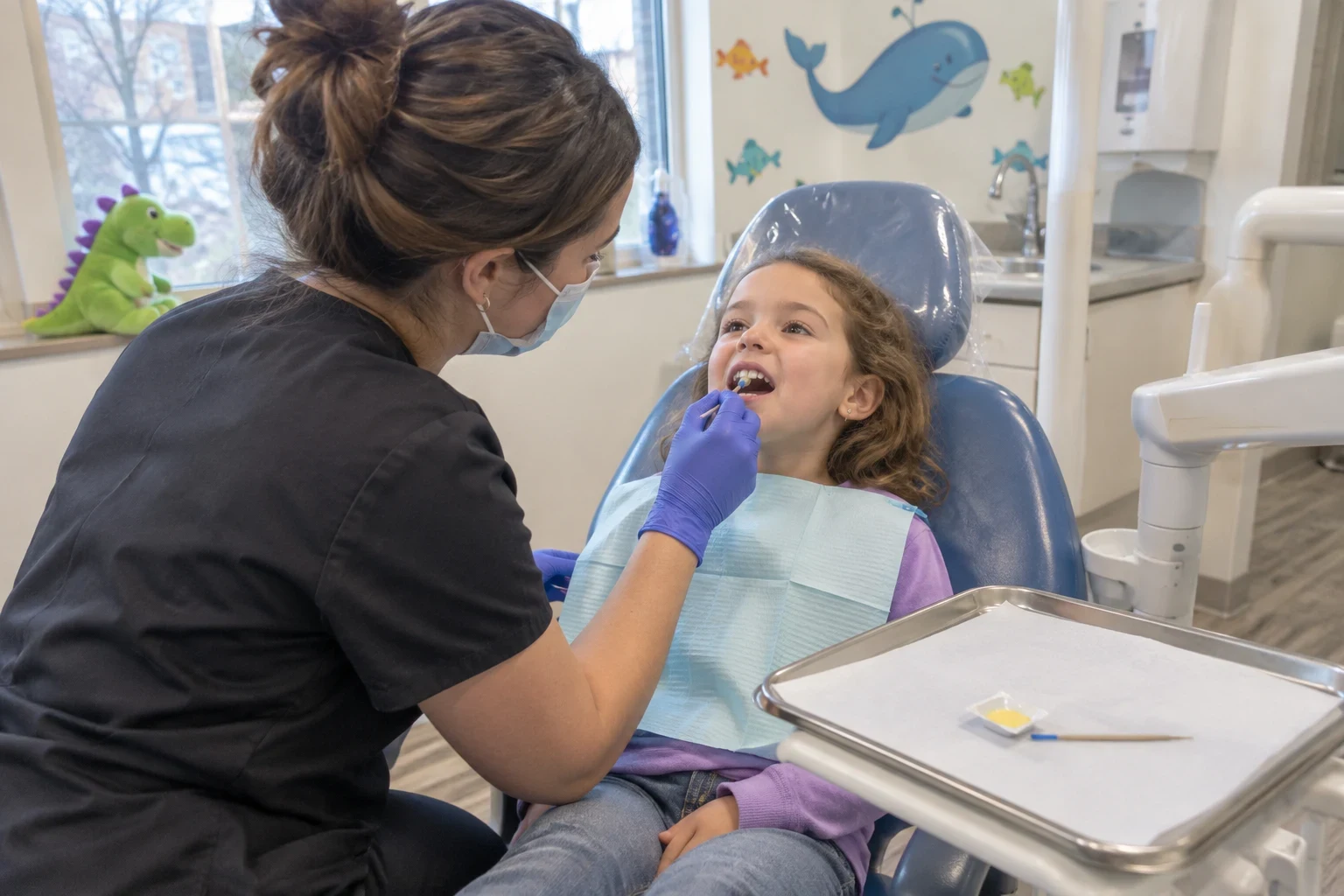
- We paint a sticky varnish on with a small brush. There are no foam trays to hold in the mouth and very little to swallow, so it works well for babies and toddlers too.
- A kid-friendly flavor
- The varnish comes in mild flavors. Most kids barely notice it beyond a slightly fuzzy feeling on their teeth.
- Clear aftercare notes
- We tell you what to avoid for the rest of the day and when brushing can start again. You get the instructions in plain words before you leave.
- A plan for next time
- We tell you when we would like to apply it again based on what we found. Some kids need it at every checkup, others less often.
Signs Your Child Could Use Fluoride
Chalky white spots
Flat, dull white areas along the gums are usually decay in its earliest stage. Found in time, fluoride can help that enamel firm back up before it turns into a cavity.
Cavities in the last year or two
A recent filling tells us whatever caused the decay is likely still at work. Fluoride is one way to slow down the next one.
Frequent snacks or sweet drinks
Juice, sports drinks and grazing through the day leave teeth bathed in acid for hours. Young enamel wears down quickly under that.
Braces or a space maintainer
Brackets and appliances catch food and get in the way of the toothbrush. Teeth next to them pick up spots more easily.
Bottled or well water
Families who drink mostly bottled water or water from a private well may get little fluoride from the tap. Let us know at the visit and we will take it into account.
What Affects the Cost
Varnish is one of the quicker, simpler steps we offer, and plenty of insurance plans cover it for kids at set intervals. Your share depends on your plan and on what else we do that visit. We talk it through with you before anything starts. For payment, you can use most insurance plans, a MasterCard, Visa or Discover card, or the CareCredit Patient Payment Plan.
Your insurance plan
Plans set their own age cutoffs and their own limits on how many applications they pay for each year. If your child needs varnish more often than your plan covers, you hear that from us before we apply it.
How often your child needs it
Kids at higher risk may need varnish more often. Kids at lower risk may need it less. What we find at the risk check sets the schedule.
What else is done that day
Fluoride usually rides along with exams and cleanings. X-rays, sealants or fillings found at that visit are billed as separate items.
How the Appointment Goes
- 1
Look and ask
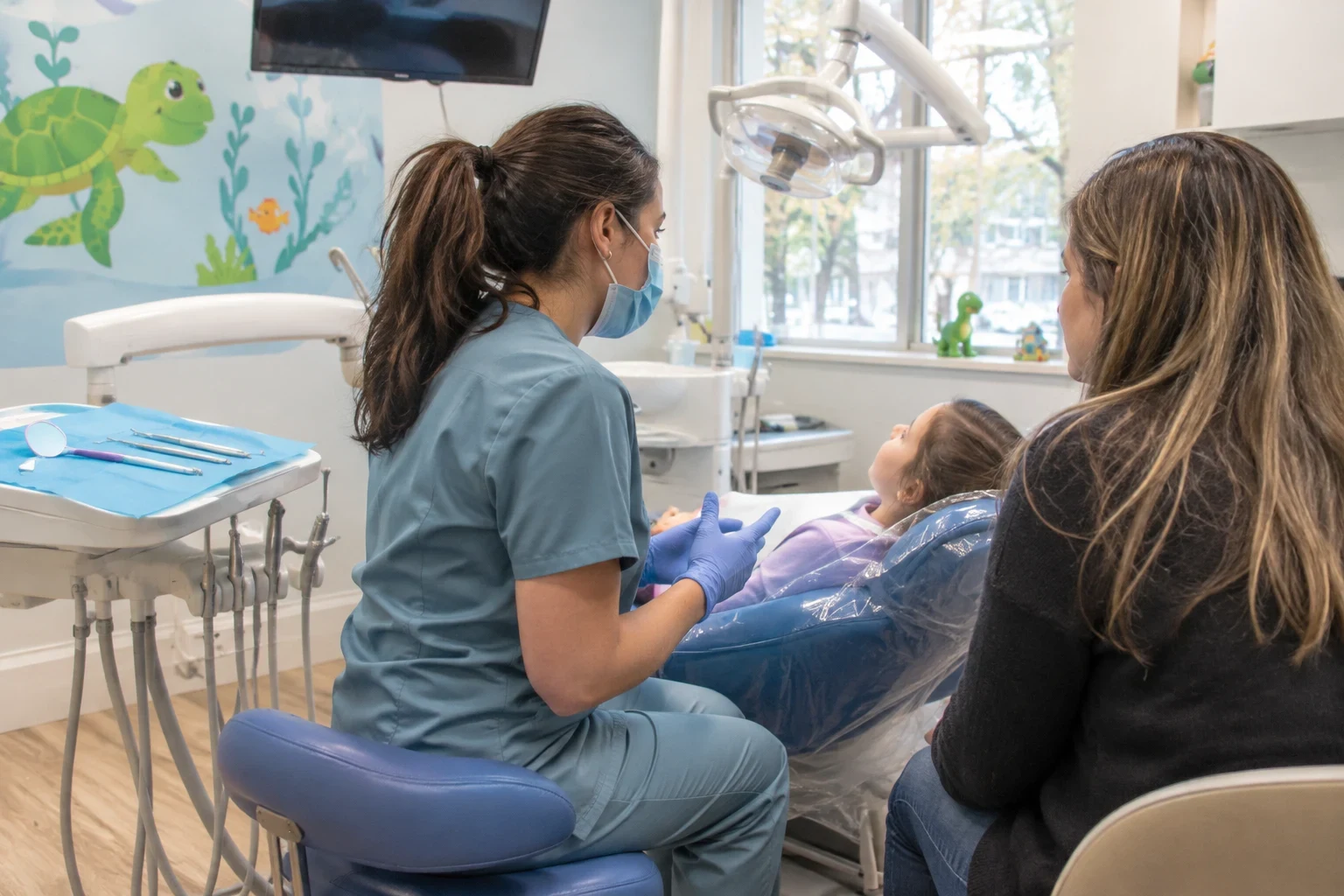
We usually do fluoride at the end of an exam and cleaning. The dentist checks each tooth and talks with you about habits at home.
- 2
Dry the teeth
We wipe the teeth dry with gauze or a little air. Varnish sticks best to a dry surface.
- 3
Paint it on
A thin layer goes on with a tiny brush. It sets as soon as it touches saliva, so your child can close right away.
- 4
Go over aftercare
Soft foods and cool drinks for the rest of the day. Skip brushing until the time we give you, then brush as normal and the varnish comes off.
What Parents Ask About Fluoride
Can my baby or toddler safely get varnish?
It is a good fit for little ones. Only a tiny amount goes on, and it clings to the teeth instead of being swallowed. That is why we use it for young kids rather than gels or rinses. We can begin as soon as the first teeth show up.
How often should my child get it?
That comes down to what we see. Kids with white spots, recent cavities or braces often get it at each checkup. Kids at low risk may need it less. Either way, we explain why.
Will it stain my child's teeth?
Some varnishes leave a faint yellow look for the rest of the day. It comes off at the next brushing. There is no lasting color.
We already use fluoride toothpaste. Is that enough?
For some kids, yes. For kids with early spots or lots of snacking, the stronger dose in varnish adds protection that toothpaste alone does not. We check the teeth first and suggest it only if it fits.
Can fluoride fix a cavity?
It can help firm up an early white spot before it breaks down. Once a hole has formed, fluoride will not close it. At that stage your child may need a filling, and we will show you what we found.
Get Your Child Started With Us
New patients start with an exam so we can see what is really going on with your child's teeth. Fluoride, if it makes sense, can happen at that same visit.