ServicesPediatric Crowns
Pediatric Crowns in Quincy, MA
When a tooth has too much decay or damage for a filling, a crown covers it and keeps it working until it falls out on its own. We take x-rays and look closely first, so your child gets a crown only when a crown is the right fix.
What a crown does for a child's tooth
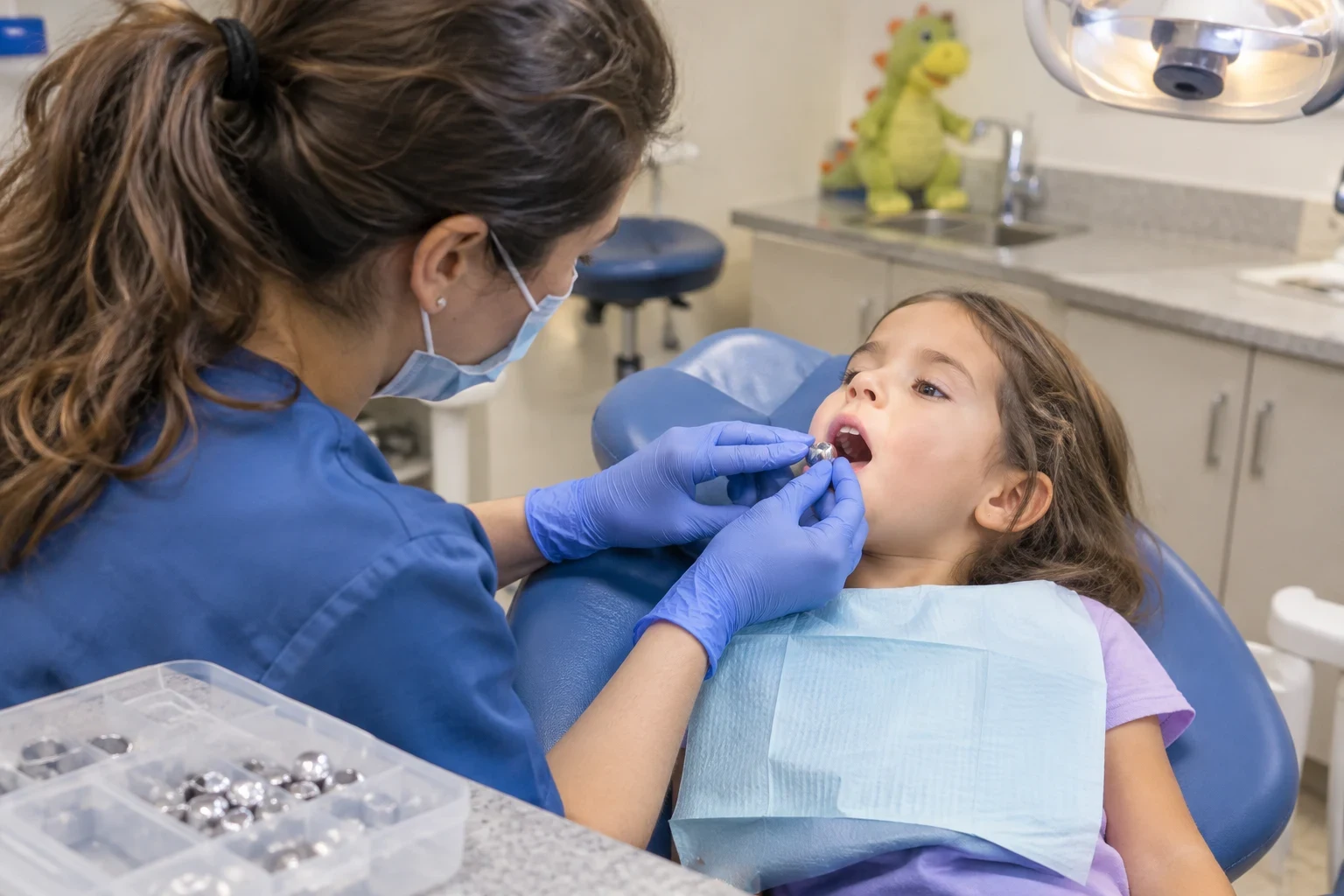
A pediatric crown is a small cap that fits over the whole tooth. On a back baby molar it is usually stainless steel. On a front tooth we often use a tooth-colored crown so the smile looks natural. Most kids' crowns come premade in sizes, so we fit one in the chair instead of waiting on a lab.
Baby molars do real work. Many stay in the mouth until a child is around 10, 11 or 12. Until then they grind food and save room for the adult teeth forming below. A molar with a big cavity that breaks down early can lead to pain, infection and crowding later.
Before we suggest a crown, we look at why the tooth broke down and how much time it has left. Sometimes a filling is enough. Sometimes the tooth is close to coming out and the better plan is to watch it. You get a straight answer either way.
What crown treatment includes
- X-rays and a close look
- We check how deep the decay goes and whether it reaches the nerve. That tells us if the tooth needs a crown alone or needs pulp treatment first.
- Stainless steel crowns for back teeth
- These are strong and hold up well to chewing. They are the most common choice for baby molars. They are silver in color.
- Tooth-colored crowns for front teeth
- For front teeth we can use white zirconia or composite strip crowns. We talk through which one suits your child's bite and habits.
- Pulp treatment when needed
- If decay reached the nerve, we treat that first, often in the same visit. Our Root Canals page explains how that works for baby teeth.
- Numbing and comfort options
- We numb the tooth so your child feels pressure, not pain. For kids who are very anxious or need several crowns, we can talk about sedation dentistry.
Signs your child's tooth may need a crown
A large cavity on a back tooth
When decay spreads across more than one side of a baby molar, a filling often won't hold. A crown covers the whole tooth.
A broken or chipped tooth
A fall or a hard bite can crack a tooth. If a big piece is gone, a crown protects what is left.
Chalky, weak or discolored enamel
Some kids have soft or thin enamel from the start. These teeth wear and decay fast, and a crown can shield them.
Fillings that keep breaking
A tooth that has needed two or more fillings and still cracks or leaks around the edges may not have enough strong tooth left. Full coverage can stop that cycle.
Pain when chewing or with cold
This can mean decay is getting close to the nerve. Getting it checked soon keeps the fix smaller.
What affects the cost of a crown
Before any work starts, we sit down with you and go over the cost. The price comes down to which tooth it is, the crown material and anything else that tooth needs first. For payment, you can use a MasterCard, Visa or Discover card, most insurance plans, or the CareCredit Patient Payment Plan to spread it out.
Crown material
Stainless steel crowns usually cost less than white zirconia or strip crowns.
Number of teeth
Treating several teeth changes the total. Doing them together can also mean fewer visits for your child.
Pulp treatment first
If decay reached the nerve, that treatment adds to the cost of the crown.
Sedation
If your child needs sedation to get through treatment safely, that is a separate cost.
Your insurance plan
Plans differ in how they cover crowns on baby teeth and which materials they pay for. We can help you read what your plan lists, but your insurer makes the final call.
How a crown visit goes
- 1
Exam and x-rays
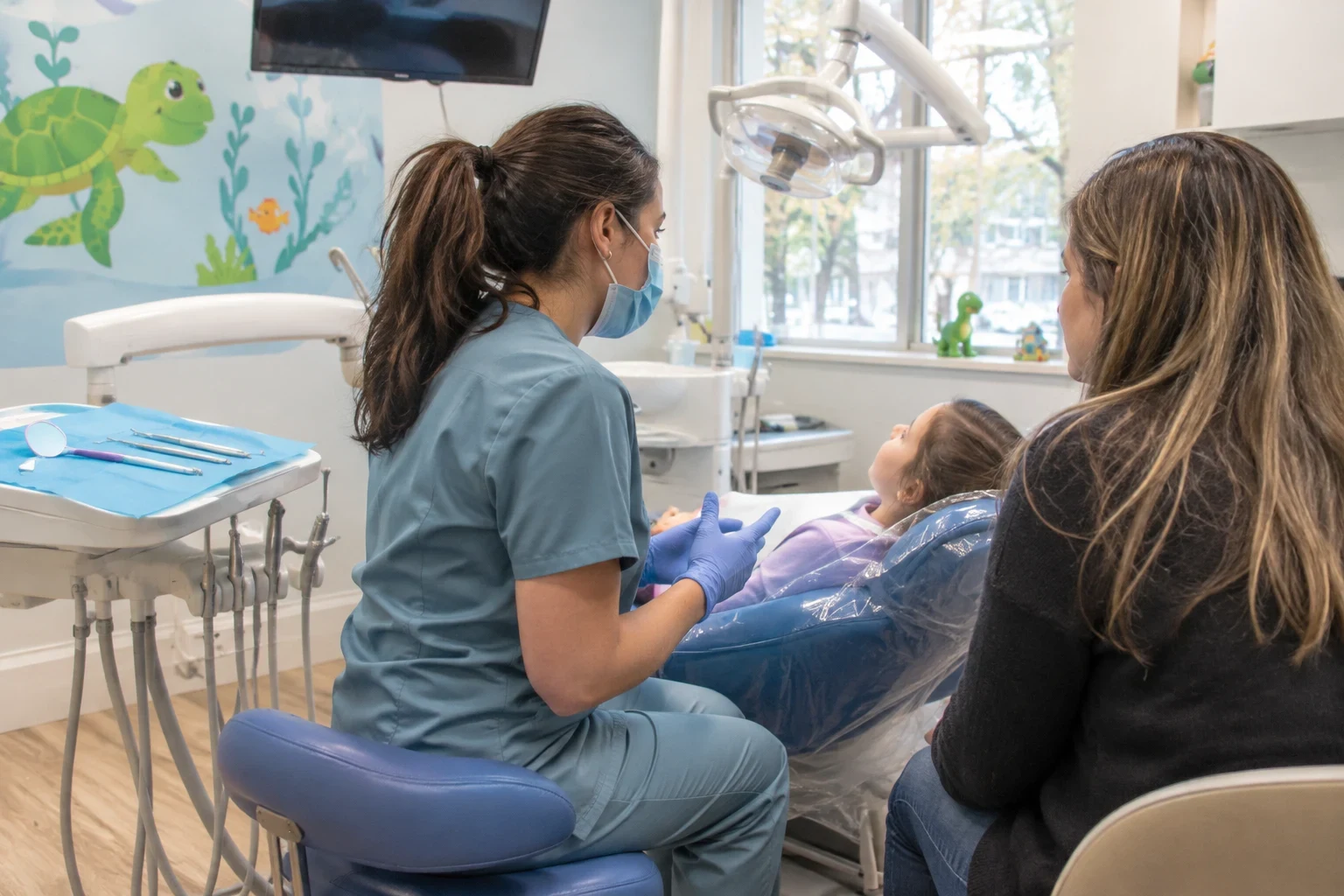
We look at the tooth, take x-rays and show you what we see. We explain the options, including whether a crown is really needed.
- 2
Getting comfortable
We numb the area gently and tell your child what is happening in kid-friendly words. If sedation is part of the plan, we go over every step with you ahead of time.
- 3
Shaping and fitting
We clear out the decay, shape the tooth and try premade crowns until one sits snug. Then we bond it on with dental cement. A single crown usually takes just one appointment.
- 4
Aftercare
Numbness wears off in a few hours, so watch that your child doesn't chew a lip or cheek. Gums may be sore for a day or two. Brush and floss the crown like any other tooth, and we check it at regular exams and cleanings.
Questions parents ask about kids' crowns
My child will lose this tooth someday. Is a crown worth it?
Often, yes. Back baby molars can stay in place until a child is around 10, 11 or even 12. Lose one years early and the neighboring teeth can drift into the gap, leaving the adult tooth without room. A crown lets that molar keep chewing and holding space until it loosens naturally. If the tooth is already close to coming out, we'll say so and skip the crown.
Will the crown look like metal?
Stainless steel crowns on back teeth are silver, and a bit may show when your child laughs. On front teeth we usually place white crowns. If you'd like a white option for a back tooth, ask and we'll explain the trade-offs.
Does getting a crown hurt?
We numb the tooth before we start, so most kids notice pressure and a little vibration rather than pain. The gums around the tooth may feel tender for a day or two. We'll go over what to expect and simple ways to keep your child comfortable at home.
What happens to the crown when the tooth falls out?
The crown comes out together with the tooth. The adult tooth comes in underneath the same way it would without a crown. You don't need to do anything extra.
Should we just pull the tooth instead?
That depends on which tooth it is and how old your child is. Taking out a molar years ahead of schedule can mean your child needs a space maintainer to keep the gap open. When there's enough healthy tooth to save, a crown is often the more straightforward choice. We'll lay out both paths so you can decide.
Let's find out what that tooth needs
If you think your child has a tooth that needs more than a filling, start with a visit. We'll look closely and explain the options before any work begins.