ServicesExtractions
Tooth Extractions for Kids in Quincy
Sometimes a tooth has to come out. Before that, we check whether it can be saved with a filling or crown. If removal is the right call, we numb your child well and work slowly. You leave with clear aftercare steps.
When pulling a tooth is the right fix
Most kids never need a tooth pulled. When one does, there is a reason. Deep decay, an infection at the root, a cracked tooth from a fall, or a baby tooth that will not let the adult tooth through. Each one calls for a different plan, so we start by finding which one it is.
We take an x-ray and look at the roots, the bone and the tooth coming in underneath. If a filling, a pediatric crown or a pulp treatment can keep the tooth, we tell you that first. Baby teeth hold space for adult teeth and help kids chew and talk, so we do not pull them early without a good reason.
If the tooth does need to come out, we tell you why in plain words and show you the x-ray. Then you decide.
What an extraction visit includes
Exam and x-ray first
We look at the tooth, the gum and the root shape on an x-ray. This tells us how the tooth will come out and whether there is infection to deal with.
Numbing done slowly
We start with a flavored numbing gel on the gum. Then we give local anesthetic gently and wait until the area is fully numb before we begin.
Careful removal
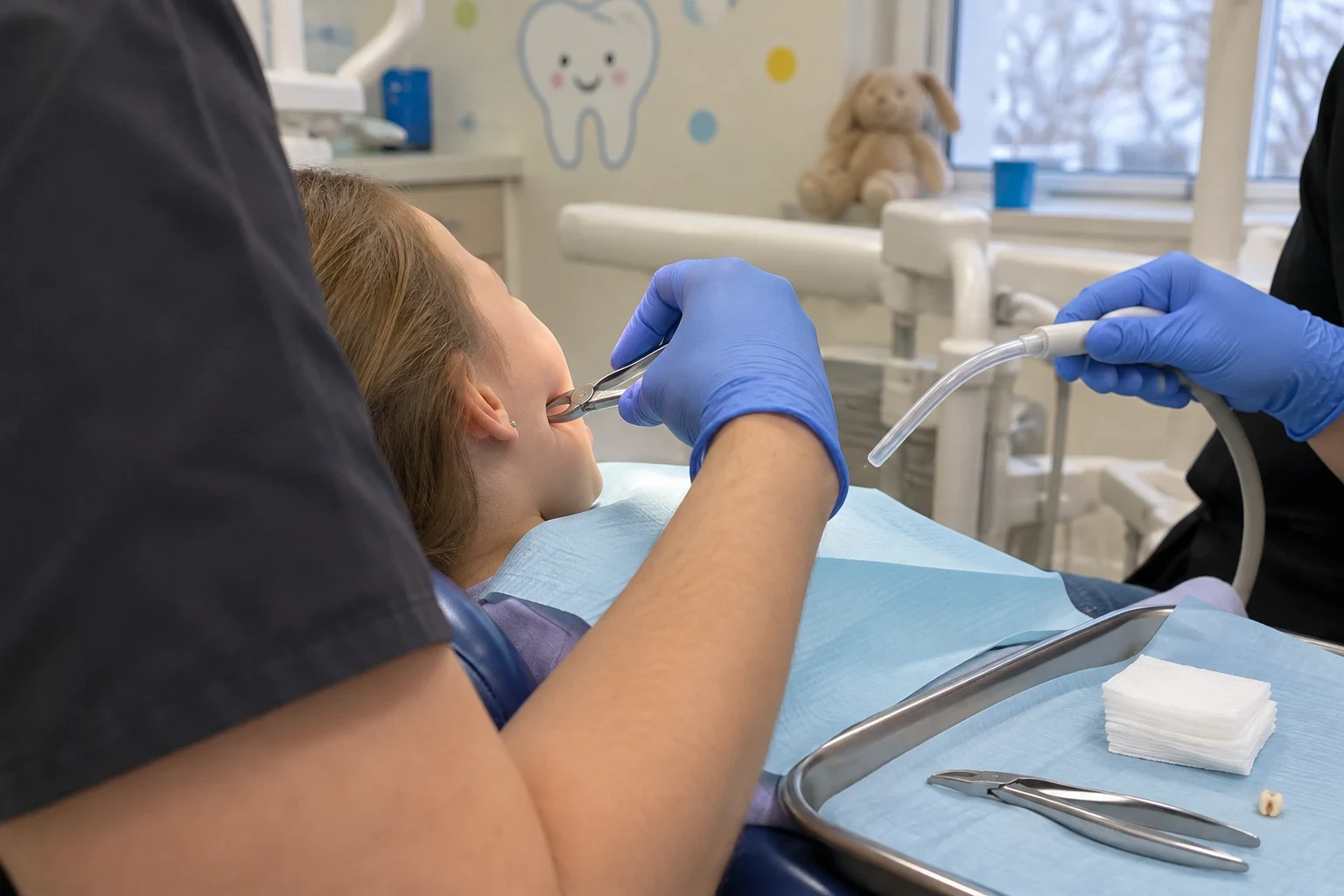
Baby teeth often have thin roots that are already shrinking. We loosen the tooth gently and lift it out, usually in a few minutes. Teeth with curved or broken roots take more care and a little more time.
Calming options
Some kids do fine with a little distraction and a calm voice. Others do better with extra help. We can talk through options on our Sedation Dentistry page if your child is very anxious or needs several teeth out.
Aftercare you can follow
Before you leave, we go over gauze, food, brushing and what normal healing looks like. You get the same steps in writing so nothing is lost on the drive back.
A plan for the gap
If a back baby tooth comes out years early, the teeth next to it can drift. We check whether your child needs a space maintainer to hold the room for the adult tooth.
Signs your child's tooth may need to come out
- A small sore spot on the gum
- A raised bump near a tooth, sometimes with a white or yellow tip, usually means infection down at the root. Some of these teeth can be treated and some cannot. An x-ray shows us which.
- A new tooth crowding in behind
- Sometimes an adult tooth breaks through behind a baby tooth that is still in place, most often at the bottom front. If the baby tooth stays firm for several weeks after that, it may need help coming out.
- Pain that keeps coming back
- A tooth that hurts when your child chews, or wakes them at night, may have decay that has reached the nerve.
- A tooth broken after a fall
- Kids crack teeth on playgrounds, bikes and ice. If the break runs below the gum line, the tooth may not be fixable.
- Swelling in the face or jaw
- Swelling means infection is spreading. Get your child seen soon so we can find the source.
How the day goes
- 1
We talk with you and your child
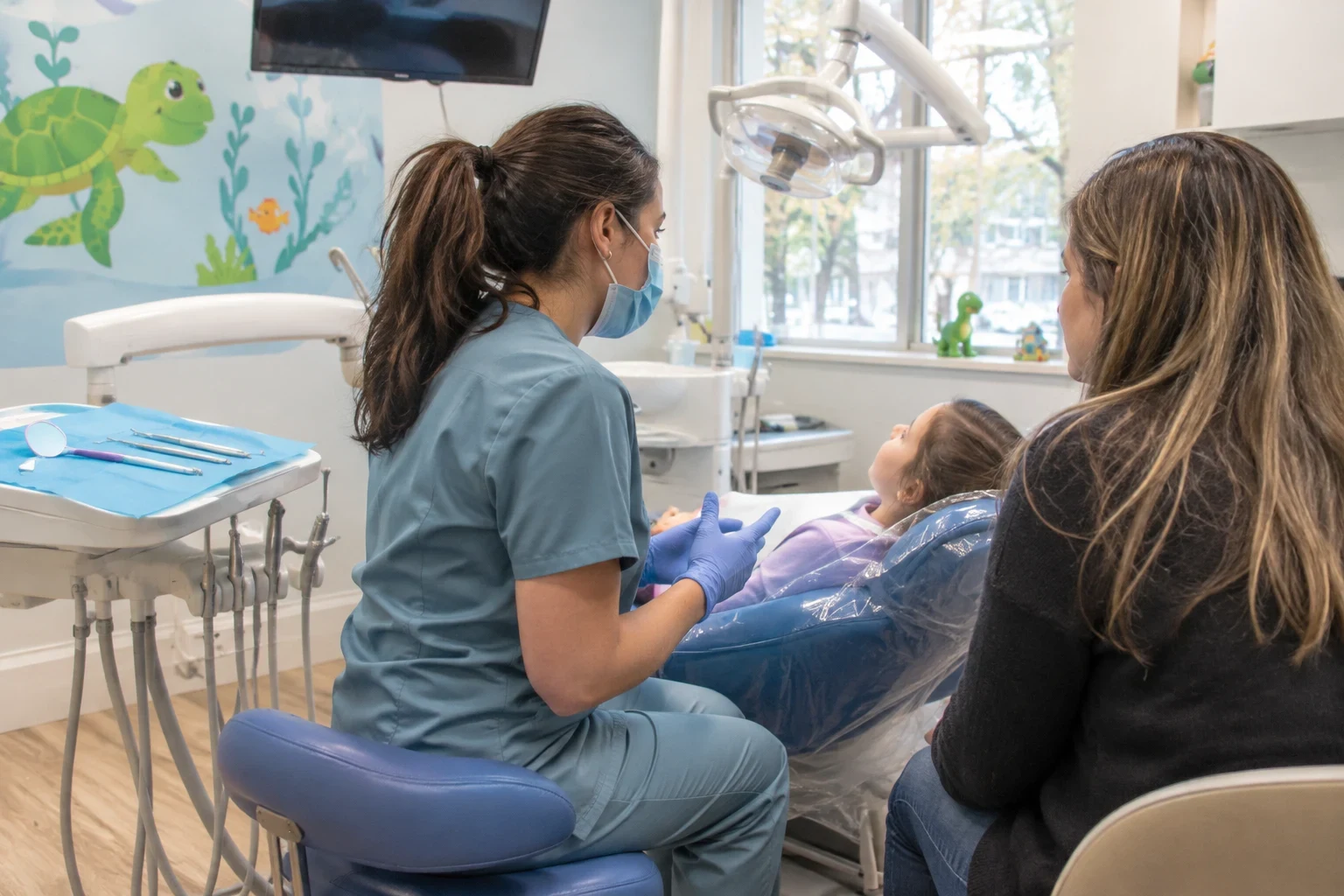
We explain what will happen in kid-friendly words. No scary terms. Your child can ask questions and you can stay close.
- 2
We numb the area
Gel first, then local anesthetic. We check that the tooth is fully numb before we touch it. Your child may feel pressure but should not feel sharp pain.
- 3
We remove the tooth
We work slowly and talk your child through it. Once the tooth is out, we place gauze and have your child bite down to stop the bleeding.
- 4
We go over healing
Soft foods and cool drinks for the rest of the day. No straws, no spitting hard, and keep your child from chewing the numb lip or cheek. Most kids are back to normal in a day or two.
What affects the cost of an extraction
The price depends on the tooth and what the x-ray shows us. We go over the cost with you before we begin, so nothing comes as a surprise. You can pay by Visa, MasterCard or Discover. Most insurance plans are accepted, and CareCredit lets you spread the cost over time with a patient payment plan.
- Simple or surgical
- A loose baby tooth with short roots comes out quickly. A tooth broken at the gum line, or one with long curved roots, takes more time and different steps.
- How many teeth
- Taking out one tooth costs less than taking out several. When more than one needs to go, we often plan them for the same visit.
- Sedation
- A calming option adds to the cost. We only suggest it when it will help your child get through the visit safely and comfortably.
- What comes after
- If your child needs a space maintainer to hold the gap, that is a separate part of the plan. We tell you about it before the extraction, not after.
- Your insurance plan
- Coverage for x-rays and extractions differs from plan to plan. When you call to schedule, our staff can help you check your benefits.
Questions parents ask about extractions
- Will it hurt my child?
- We numb the tooth fully before we start, so your child should feel pressure but not pain. Once the numbing wears off, some soreness is normal. Children's pain reliever, as your pediatrician recommends, usually handles it. Most kids feel fine by the next day.
- Why not just wait for the baby tooth to fall out?
- Sometimes waiting is the right answer, and we will tell you if it is. But an infected baby tooth can harm the adult tooth forming underneath. A baby tooth that will not loosen can also push the adult tooth off course. The x-ray shows us which case we are dealing with.
- Does my child need a space maintainer after a tooth comes out?
- It depends on which tooth and how old your child is. Front baby teeth usually do not need one. Back baby molars lost years early often do, because the teeth beside them tip into the gap. We check this at the visit and explain it on our Space Maintainers page.
- What can my child eat after an extraction?
- Soft, cool foods for the first day. Yogurt, applesauce, mashed potatoes, pasta and smoothies eaten with a spoon. Skip straws, chips and anything crunchy near the spot. Normal food can come back as soon as chewing feels comfortable.
- When should I call about bleeding or swelling?
- A little oozing for a few hours is normal. Bleeding that soaks through gauze after steady biting, swelling that grows after the second day, or a fever are reasons to call us. We will tell you what to do next.
Not sure if the tooth needs to come out
Bring your child in and we will look at the x-ray together. Kids from Quincy, Braintree, Milton and nearby towns see us for this. You will know the cause and the options before anything is decided.