ServicesFillings
Children's Fillings in Quincy
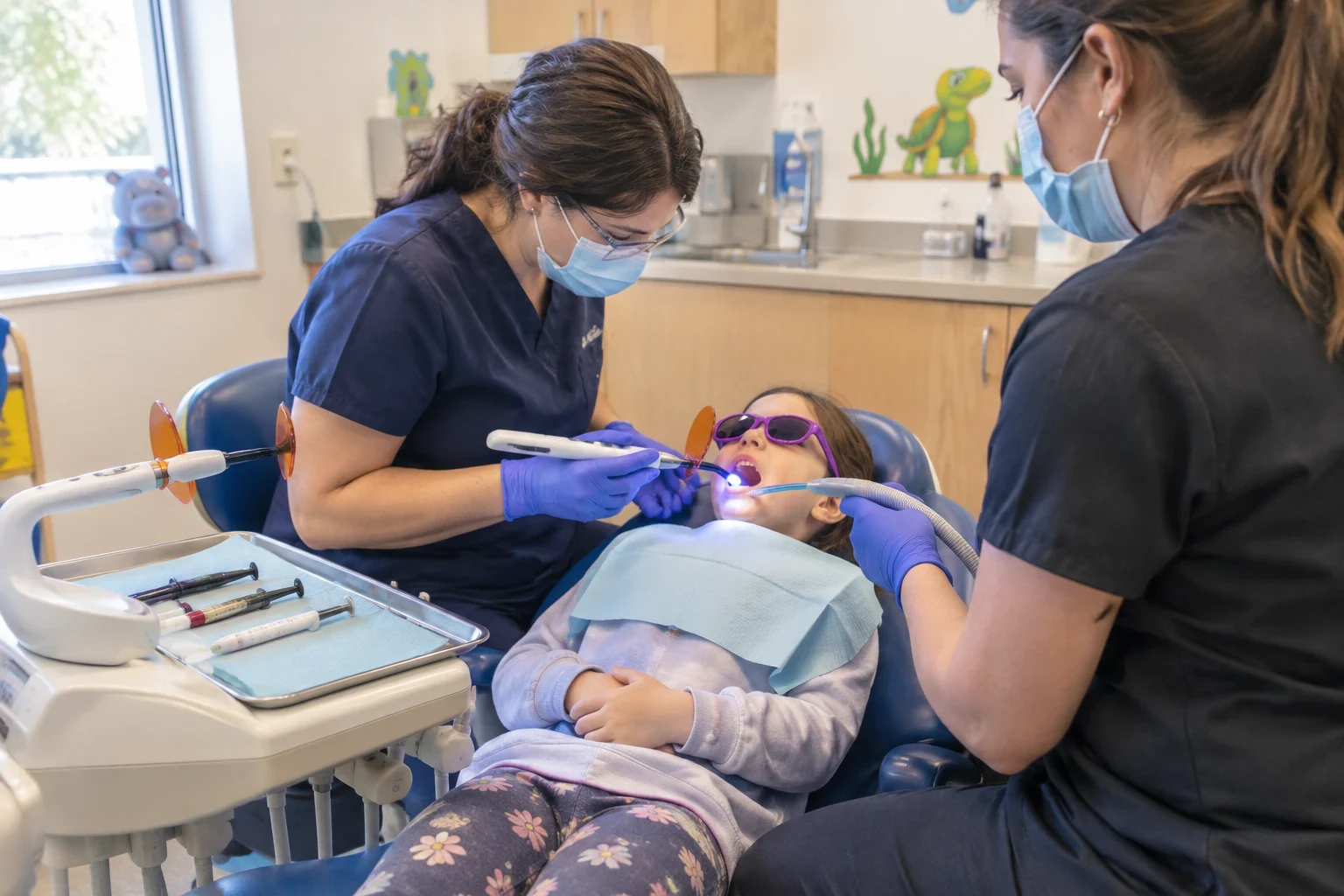
A cavity in your child's tooth needs more than a patch. We check how deep the decay goes and why it started, then fill the tooth gently and in plain view of you. You leave knowing what to change so the next checkup goes better.
Fixing the cavity and what caused it
A filling repairs a tooth where decay has broken through the hard outer layer. We clean out the soft, damaged part and fill the space. Your child can chew without pain, and the decay stops spreading.
Before we start, we look at why the cavity formed. A cavity between two back molars often means food is getting trapped where a toothbrush can't reach. One in a deep groove on top of a molar may mean the tooth needed sealants. Decay near the gumline on front teeth can trace back to bedtime bottles or sipping juice all day. Knowing the cause tells us how big the filling should be and what will stop the next one.
Baby teeth matter too. They hold space for adult teeth and help kids eat and talk clearly. Their enamel is thinner than adult enamel, so a small cavity left alone can reach the nerve faster than most parents expect.
What a filling visit includes
A close look and X-rays when needed
We check the tooth by eye and take X-rays when decay may be hiding between teeth. That shows us how deep it goes before we touch anything.
Tooth-colored filling material
For most kids' fillings we use a tooth-colored composite that bonds to the tooth. It blends in with the smile, and we shape it to fit how your child bites.
Gentle numbing
Numbing gel goes on first. If the tooth needs more, we give local anesthetic slowly. We tell kids what they'll feel in simple words and go at their pace.
Bite check and polish
Once the filling sets, we check the bite so nothing feels high, then smooth the surface.
A plan for the cause
We tell you what we think led to the cavity and what would help. That might be flossing one tight spot, changing snack timing, sealants on nearby molars or a fluoride treatment.
Signs your child may need a filling
- Pain with sweets or cold
- If your child winces at ice cream or cold water on one side, decay may have reached the softer layer under the enamel.
- White chalky spots or brown marks
- Chalky white lines near the gums are early weak spots. Brown or dark spots that don't brush off can be cavities.
- Food stuck in the same spot
- A hole or rough edge traps food. Kids may pick at it with a finger or tongue.
- Chewing on one side
- Younger kids often don't say a tooth hurts. They just stop using that side of the mouth.
- A cavity found at a checkup
- Many cavities cause no pain at first. Regular exams & cleanings catch them while they are still small and simple to fix.
How the visit goes
- 1
Look first, then explain
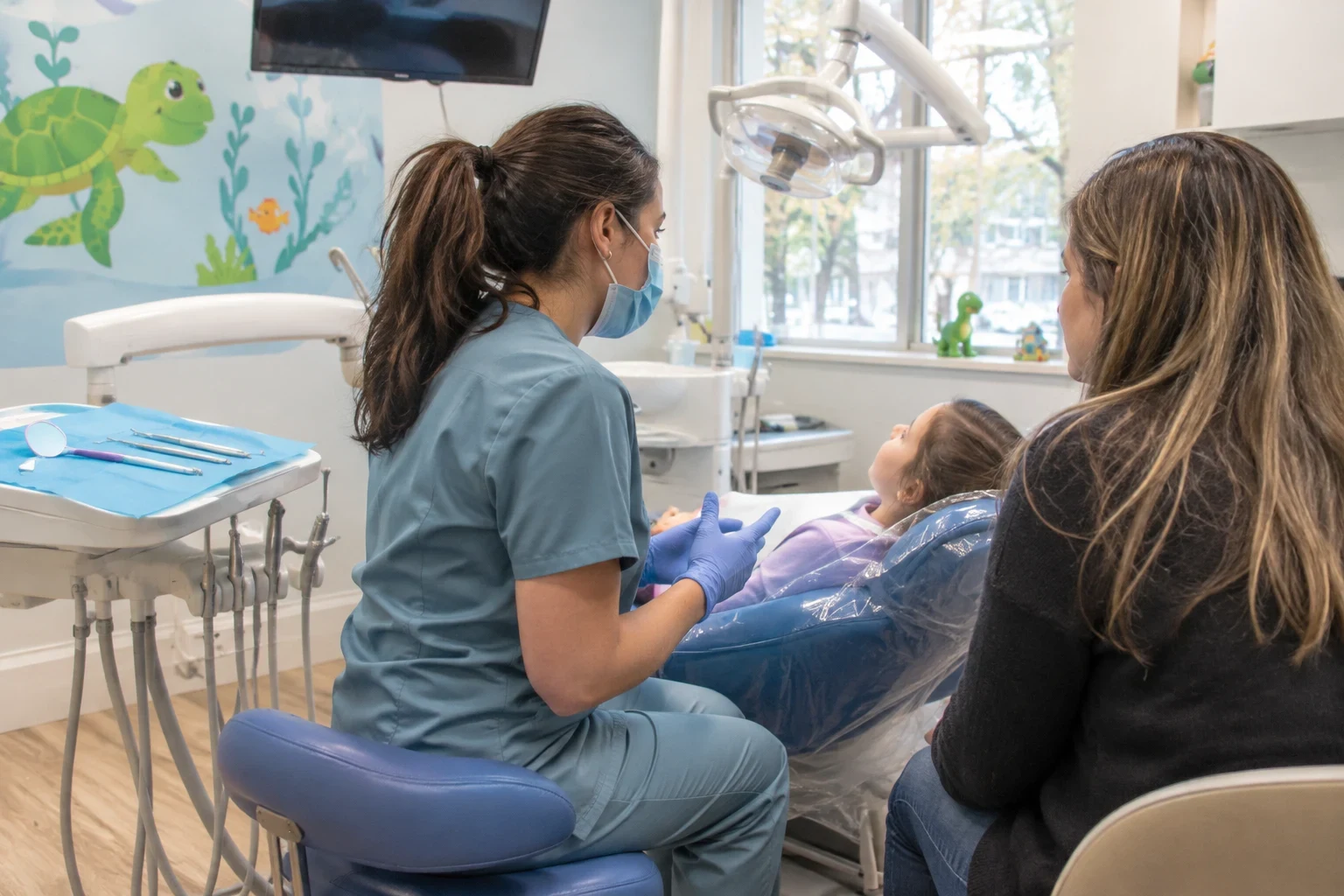
We hear what you've noticed, check the tooth and take X-rays if needed. Then we tell you what we found, how deep it is and why we think it happened.
- 2
Get your child comfortable
We show each tool before we use it and keep the words simple. For kids who are very nervous or need several fillings, we can talk with you about sedation dentistry.
- 3
Clean and fill
We remove the decay and place the filling in thin layers, hardening each one with a blue light. Most single fillings take one short visit.
- 4
Check the bite and go over care
We check the bite and polish the tooth. If your child was numbed, watch for a couple of hours so they don't chew their lip or cheek.
What affects the cost of a filling
Before any work starts, we walk you through the cost so you know what to expect. The total comes down to which tooth it is and how much decay we find once we look closely. You can pay with a Visa, MasterCard or Discover card. Most insurance plans are accepted, and the CareCredit Patient Payment Plan is another option if you'd like to spread out payments.
- Size of the cavity
- A small filling on one surface of a tooth costs less than a larger one that reaches across two or three surfaces.
- How many teeth need work
- We can often treat several cavities in the same visit. Each tooth still adds to the total.
- Depth of the decay
- When decay sits close to the nerve, a filling may not last. A pediatric crown or root canal can be the better fix, and we tell you why before we change the plan.
- Sedation
- Some kids need sedation to get through treatment safely and calmly. When that's the case, it adds to the cost.
- What your plan covers
- Insurance coverage for fillings is different from plan to plan. We can help you read what your plan lists before treatment begins.
Questions parents ask about fillings
- Baby teeth fall out on their own. Why bother filling one?
- Not all of them go early. The back baby molars often hang on until a child is 10 to 12 years old. Left untreated, a cavity keeps growing and can lead to pain, infection or decay in the teeth next to it. If a baby tooth is lost too soon, nearby teeth can shift into the gap the adult tooth will need later.
- Will the filling hurt?
- We numb the area first, so most kids feel pressure and some buzzing, not pain. The tooth may be a bit tender for a day or two afterward. A children's pain reliever usually takes care of it.
- How long does a filling take?
- One small filling is usually a short appointment. More teeth, or a child who is scared, can stretch it out. Sometimes we split the work into two visits so your child stays calm.
- Can my child eat after a filling?
- Yes. Tooth-colored fillings are already set hard by the time your child gets out of the chair. If the area was numbed, hold off on food until feeling comes back so they don't bite their tongue or cheek.
- How do we stop another cavity from forming?
- Finding the cause is the first step. We show you where the decay began and what most likely fed it, then point to the one or two habits worth changing. For teeth at higher risk, sealants and fluoride treatment add protection.
- When is a crown better than a filling?
- If decay has eaten away a big part of a baby molar, a filling may break or come loose. A pediatric crown covers the whole tooth and lasts better until the tooth falls out naturally.
Have that tooth checked
If your child has a sore tooth or a spot you're not sure about, we'll look, tell you what's going on and fix it gently. Families come to us from Quincy, Braintree, Weymouth and Milton.